AID Research Symposium 2026
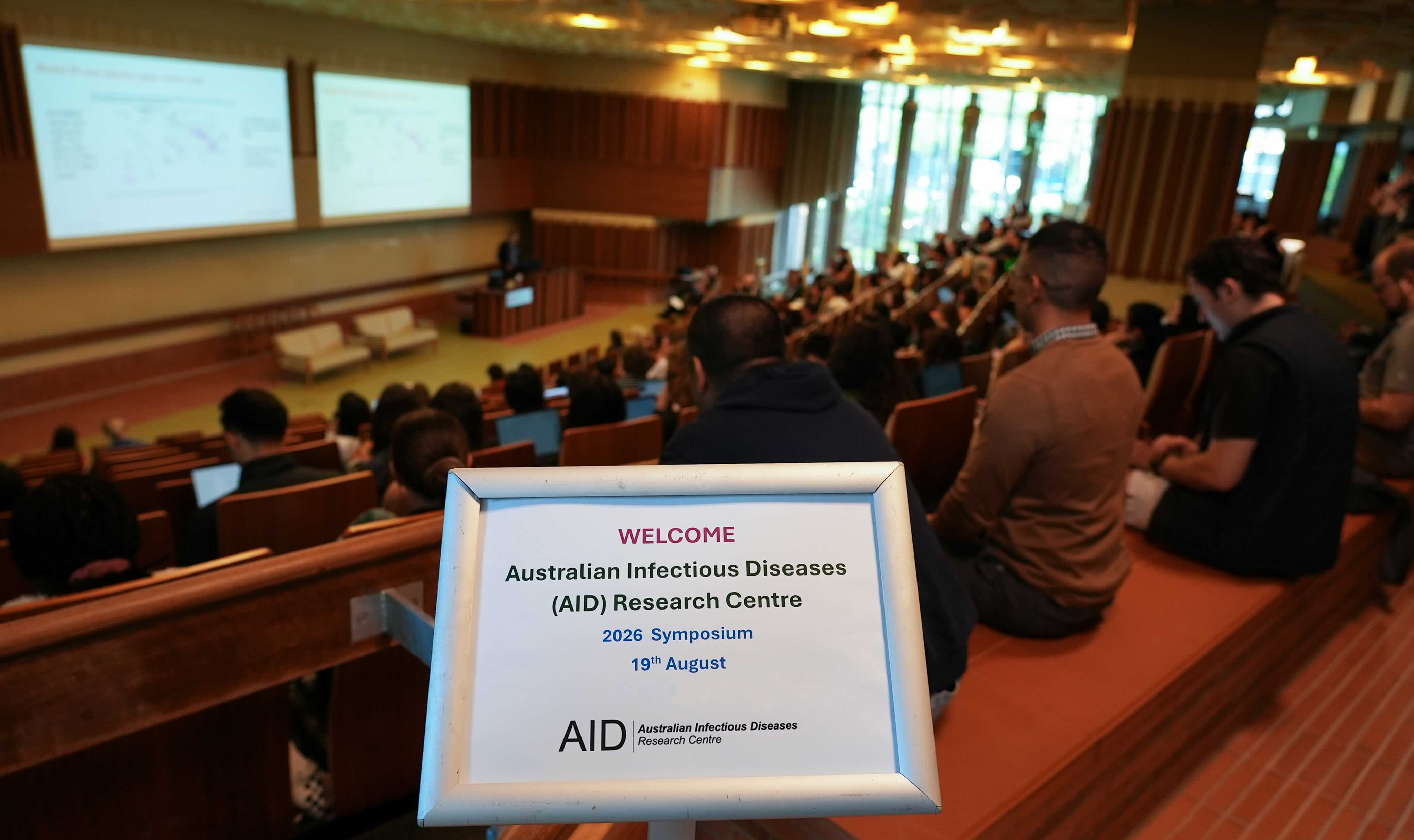
The 2026 AID Research Symposium was a great success! With more than 200 attendees, the day showcased the breadth, strengths, and collaborative spirit of infectious disease research across the AID network. The diverse program featured infectious diseases research across sessions on Next generation epidemic intelligence, Climate, vectors & one-health preparedness, Host-pathogen mechanisms and interactions, and Diagnostics and therapeutics.
Highlights of this year’s program included a keynote address by Prof. Helen Marshall from the University of Adelaide, who leads the team awarded the 2025 Australian Museum Eureka Prize for Infectious Diseases Research.
Another highlight was an expert panel exploring the spread of Aedes aegypti and other mosquito vectors across Queensland and the implications for mosquito-borne viral infections and public health. The panel brought together Dr Brendan Trewin (CSIRO), A/Prof Leon Hugo (QIMR Berghofer), Dr Cassie Jansen (Queensland Health), and Dr Brian Montgomery (Metro South Public Health Unit), and was moderated by Prof. Nigel Beebe from The University of Queensland’s School of the Environment.
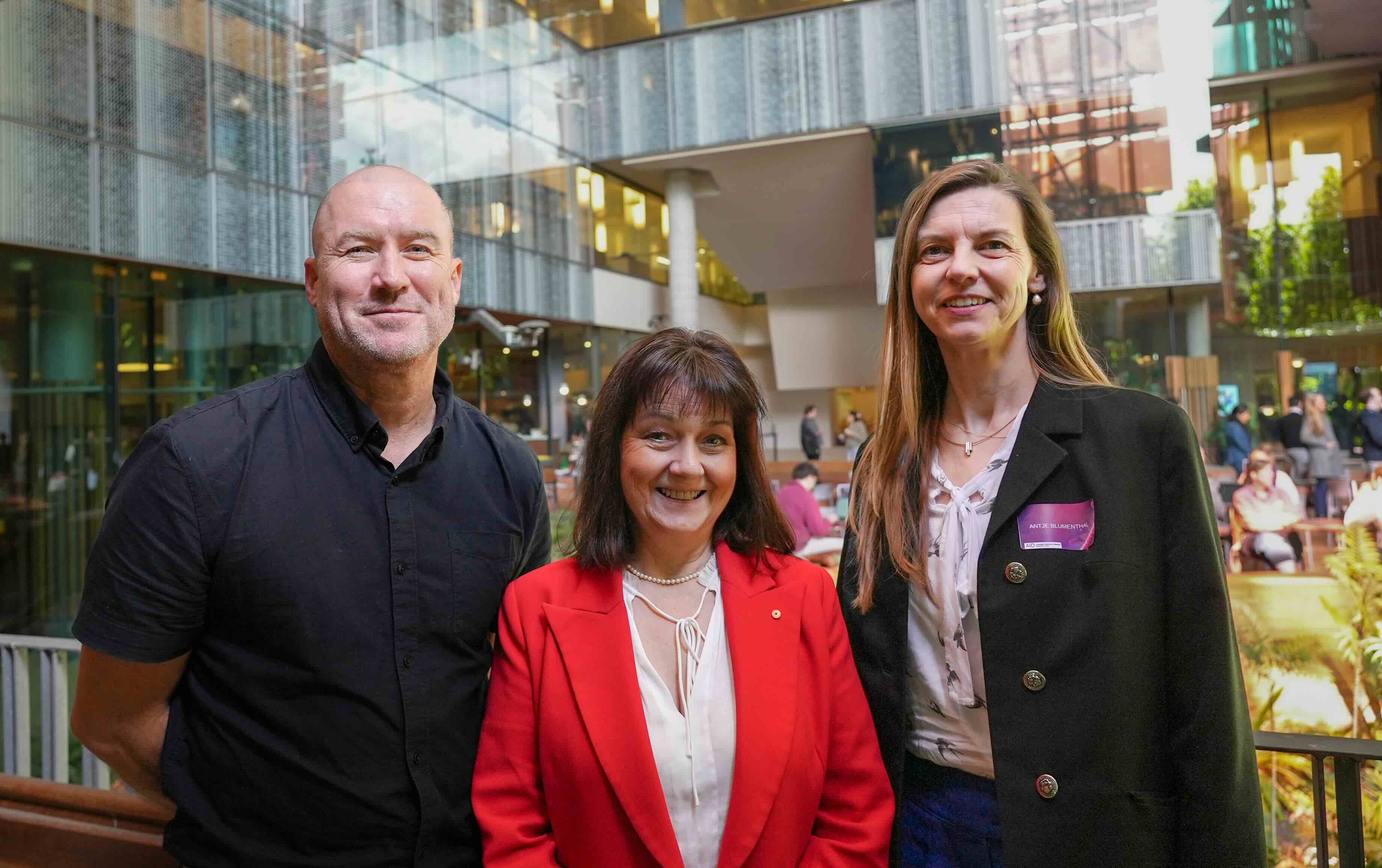
Photo curtesy of TRI
For the first time, the symposium also featured poster presentations, providing students and early-career researchers with an opportunity to showcase their work, discuss their research with colleagues, and build new connections across the AID community. Congratulations to our poster award winners, Esabel Roncon and Madeline Thompson, and thank you to all our student and ECR poster presenters for making the sessions such a successful addition to the symposium.
A huge thank you to the 2026 AID Symposium Organising Committee, whose hard work behind the scenes made our largest symposium to date possible, as well as to our invited speakers, session chairs, poster presenters, and everyone who attended and contributed to the day.
The 2026 AID Research Symposium was a wonderful reflection of the continued growth and strength of the AID research community. We look forward to building on this momentum in 2027!
AID Research Symposium 2025

The 2025 AID Research Symposium brought together researchers from UQ, QIMR Berghofer, BRIN, and partner institutes for a vibrant day of talks exploring innovation across the infectious disease research landscape.
The program featured sessions spanning infection prevention and diagnosis, microbial pathogenesis and host–microbe interactions, and treatment innovations and antimicrobial resistance. Highlights included the
uplenary presentation by Professor Rachel Thompson (UQ Medical School and Head, Greenslopes Clinical Unit) on personalised medicine for nontuberculous mycobacterial pulmonary disease, as well as the presentation by Professor Cameron Simmons, Head of the Sanofi Translational Science Hub, on partnerships for impact through Sanofi’s Sanofi Translational Science Hub.
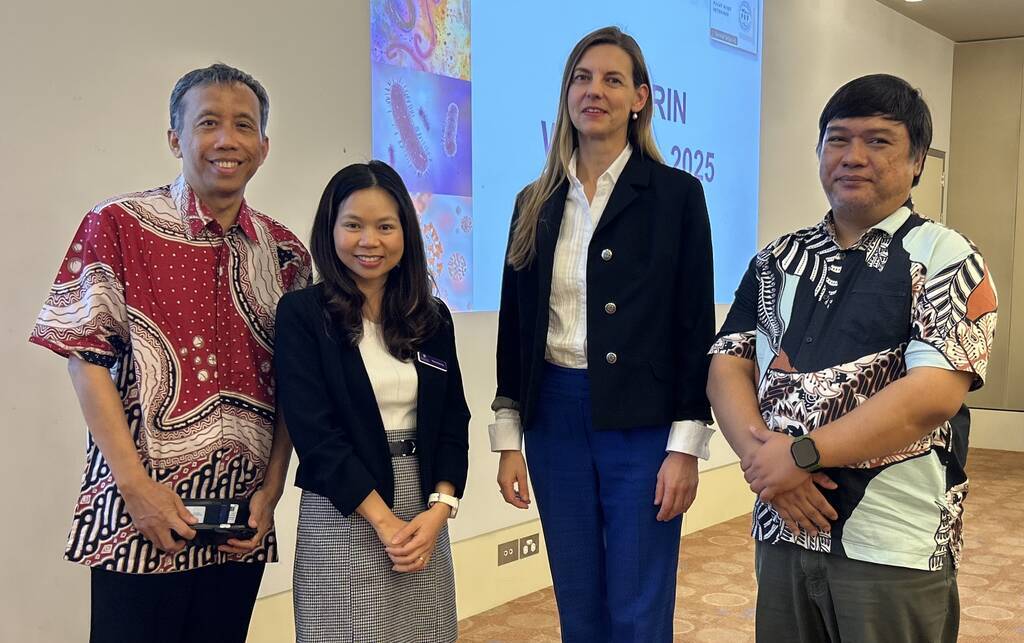
The symposium also featured talks from presenters across all career stages on topics showcasing the breadth of expertise and research capacity within the AID network. Presentations by Dr Tarwadi and Dr Utomo, our invited guests from the National Research and Innovation Agency Indonesia (BRIN) offered excellent opportunities to explore new collaborations between AID and BRIN researchers.
A heartfelt thank you to all our speakers, chairs, and participants for making the event such a success. The energy and collaboration on display reflect the strength of the partnership between Brisbane-based scientists and the international research community, driving forward innovative infectious disease research in Australia and beyond.
AID-BRIN Workshop 2025
The AID–BRIN Workshop brought together researchers from AID and Indonesia’s National Research and Innovation Agency (BRIN) to share insights and strengthen collaborative research ties.
The workshop drew 58 in-person and 83 online participants, featuring presentations on antimicrobial discovery, antimicrobial resistance, dengue, malaria, and tuberculosis. A highlight of the day was the lively discussions and exchange of ideas that set the stage for future joint research initiatives. The workshop concluded with a networking session that encouraged new collaborations and friendships across borders.
Thank you to all speakers, chairs, and participants for contributing to a productive and inspiring day of international partnership.